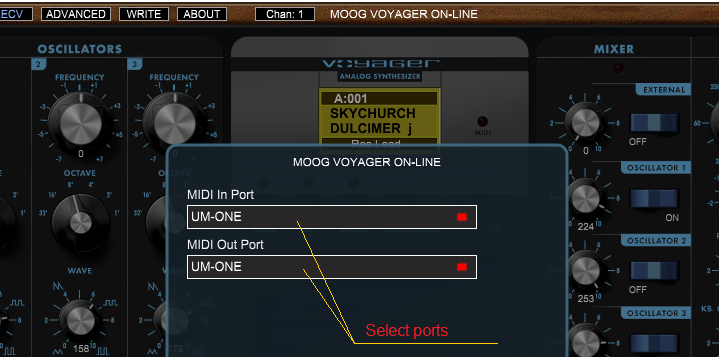
- Go to PlugSE MIDI Setup and select MIDI ports in and out. At this point you should
have it ON-LINE.
The PlugSE is designed to serve as a bridge between the host and the synthesizer
and in principle the Voyager should be connected directly to the PlugSE via MIDI.
By default, most of the VST hosts are set to grab all MIDI ports on startup and this
may create a connection problem for PlugSE users.
If you are using a Windows PC many MIDI interfaces are not multi-client - this means
that ports can be opened and used only by one application at a time. It also means
that in practice, after you start the host application the host may first access
and open MIDI ports that your synth is connected to and prevent the PlugSE from accessing
the same ports later on. Similar setup can be used on MacOS.
Here is what you should do:
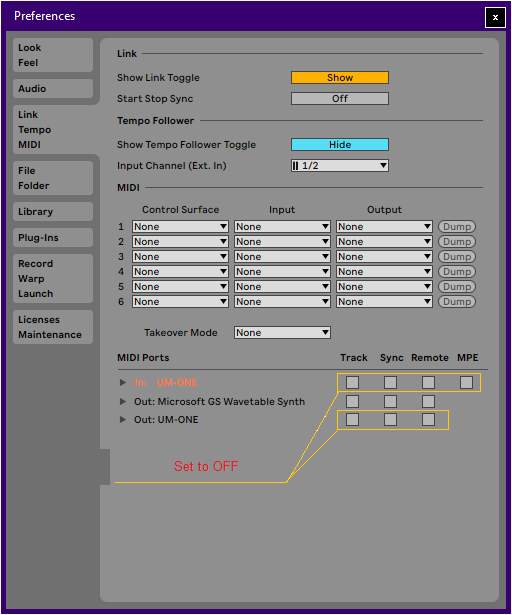
- Go to Ableton preferences/devices and disable both MIDI IN and MIDI OUT ports that
Voyager is connected to. In this example our Voyager is connected via Roland UM-ONE
USING VOYAGER PLUGSE IN ABLETON
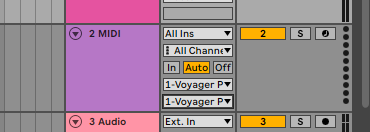
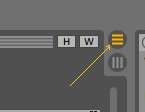
- In Ableton, set track in horizontal position
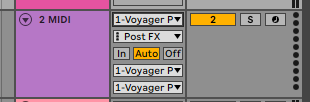
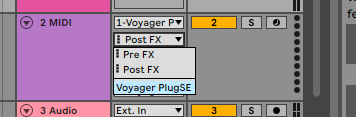
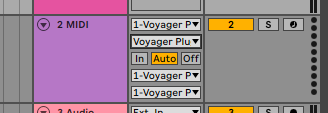
- Select the 2 MIDI track and configure TRIGON-6 PlugSE for track's output.
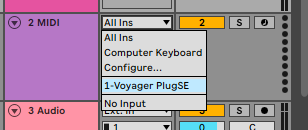
- If you are using Voyager as a MIDI controller then you can set MIDI track input
to 1 Voyager PlugSE and
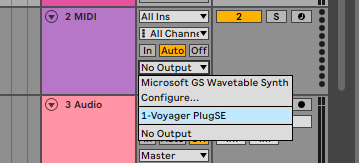
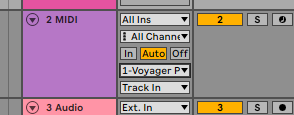
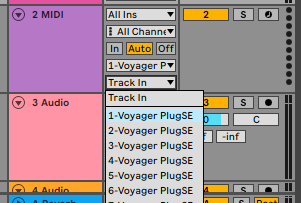
- Next, select MIDI playing channel and make sure that it matches Voyager’s MIDI
channel. In this example it is MIDI channel 1.